Book Review of Deceit by Yuri Felsen (trans Bryan Karetnyk)
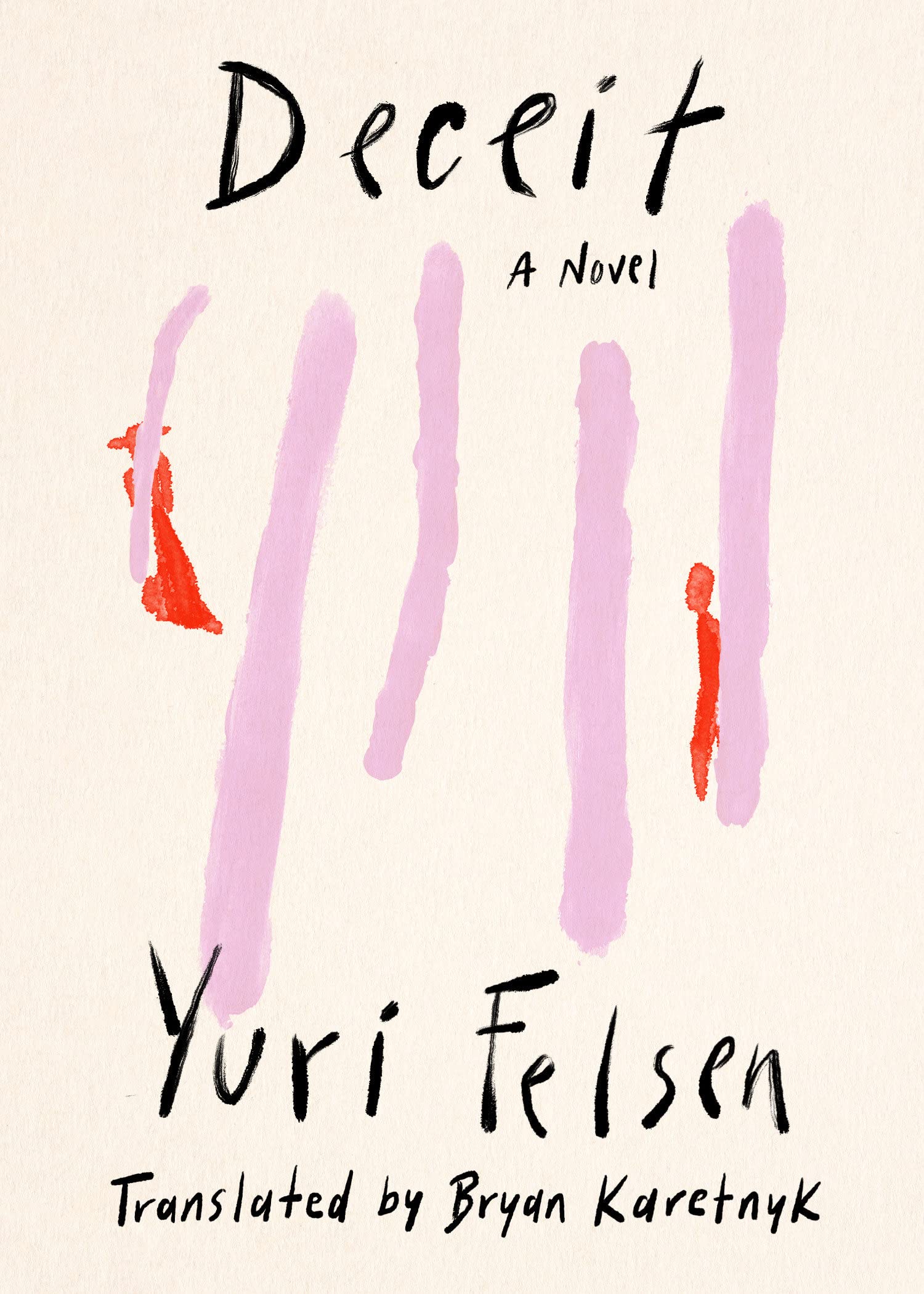
Name of Book: DeceitAuthor: Yuri Felsen (Bryan Karetnyk)
ISBN: 9781662601965
Publisher: Astra House
Type of book: France, Russian emigre, obsession, 1920s, love, work, classicism, novels, life, futility, broken relationships, broken marriage, crushes
Year it was published: 1930 (2023)
Summary:
Deceit is the first major work by Yuri Felsen, referred to by his contemporaries as ‘the Russian Proust’, a significant writer who died in the gas chambers in Auschwitz, and whose legacy and archive was destroyed by the Nazis.
Written in the form of a diary, the novel recounts the unnamed narrator’s complex and emotionally fraught relationship with his love interest and sometime muse. While the plot itself is relatively simple, the real revelation in Felsen’s writing is its supreme originality of language and psychological introspection.
Quite unlike any other writer in the Russian canon, Felsen evokes in rich, poetic, idiosyncratic prose not only the Zeitgeist of interwar Europe and his émigré milieu, but also its psychology and the existential crisis of the age. What Nabokov achieves with images and the physical world, Felsen does with the emotional and metaphysical.
This is the first English translation of this landmark modernist novel.
The main characters are the narrator and Lyolya. The narrator seems to have an aristocratic background and has arrived from Russia and is trying to survive. He holds disgust and contempt for numerous activities and works as well as certain people and often complains about everything. He learns from a friend that her beloved niece Yelena "lyolya" is arriving to France from Germany and he starts to falling in love with her as well as obsessed. We only know Lyolya from the narrators writings which means at first she is warm and receptive then absent then very hostile. What led to that particular path isn't really told.
Theme:
What is hidden?
Plot:
The story is told in first person narrative from unnamed narrators point of view. Simply put it is split into three parts in 1920s or so in France. In the first part, the narrator lives in France but has an old fashioned view of money and work ( realizing he needs it but feels disgusted by the work he needs to do to get it.) From a friend or so he learns of Lyolyas arrival and develops a crush on her. When she arrives, they get along well and are friendly. In second part Lyolya leaves our narrator and he continues to obsess over their relationship. In third part she returns and both face a reckoning over their choices. The tale is told in diary form and takes place from December to October, although plenty of months are missing in between. ( Part I: December 7th to December 21st; Part II: June 17th to July 7th and Part III: September 15th to October 15th.) Thus it's up to the reader to figure out what happened between the lines.
Author Information:
(From goodreads)
Pseudonym of the Russian émigré author Nikolai Freudenstein.
Felsen was very popular in the 1930s, known by critics as the Russian Proust, but close to forgotten after dying in Auschwitz, in 1943. His manuscripts and letters were lost – possibly destroyed – after his arrest.
Academic and translator Bryan Karetnyk discovered Felsen’s name while reading literary criticism from the 1930s, finding that he was widely praised, and going on to track down Felsen’s own writings.
So, this is a really interesting novel, something that will encourage the reader to wonder how much is left out, and whether or not the narrator is telling the truth, at least was the case with me. To say the narrator has quite an obsession with Lyolya is definitely an understatement of the century. ( Also, anyone else find it interesting that the novel takes place 100 years ago? Just me then...) I also felt very similar vibes to Spring on the Peninsula by Ery Shin, especially on the hyperobsession of life and relationships of people. Did I enjoy it? I think second half was more enjoyable although I definitely struggled with figuring out certain event from first half.
This was given for review
4 out of 5
(0: Stay away unless a masochist 1: Good for insomnia 2: Horrible but readable; 3: Readable and quickly forgettable, 4: Good, enjoyable 5: Buy it, keep it and never let it go.)

Comments
Post a Comment